A daily game only works if everyone gets the same thing. If you play GeoDrop in Denver and a friend plays it in London on the same day, you should both be dropping pins on the same eight places, and your scores should mean the same. Getting there takes a few rules that most players never see. Here they are.
One day, on one clock
Every day on Gamefinity runs from midnight to midnight New York time. That is 05:00 UTC in winter and 04:00 UTC in summer, so the two days a year when the clocks change last 23 and 25 hours. One clock for everyone means a day is the same day for every player, wherever they are.
The code that decides which day it is uses plain whole-number arithmetic and no time-zone data from the browser, so our servers, your browser and the game itself agree on the day to the millisecond. Each daily game also shows the reset on your own clock: the line under Play says when the next puzzle opens where you are, with midnight New York time beside it.
One seed, one round
None of our games rolls its own dice. A game's rules run from a seed, a short string of digits that drives every random choice, and nothing else that could differ between devices. Give a game the same seed and the same moves and it plays out the same way on any phone or computer. For a daily game, the seed is made from the game and the date, so every player of that game gets the same seed that day, and with it the same round.
For many games the seed is only a key, and the content was planned long before. Uncommet recognises each day's seed from a table of days that runs eight years ahead and deals that day's eight prompts from it. Mate in One has a deck of 366 days of 50 real chess puzzles each and plays the deck day for the date, so a puzzle cannot come back within a year. Thimbly deals its three hoops from a four-year table in which no hoop of a size comes back on another day.
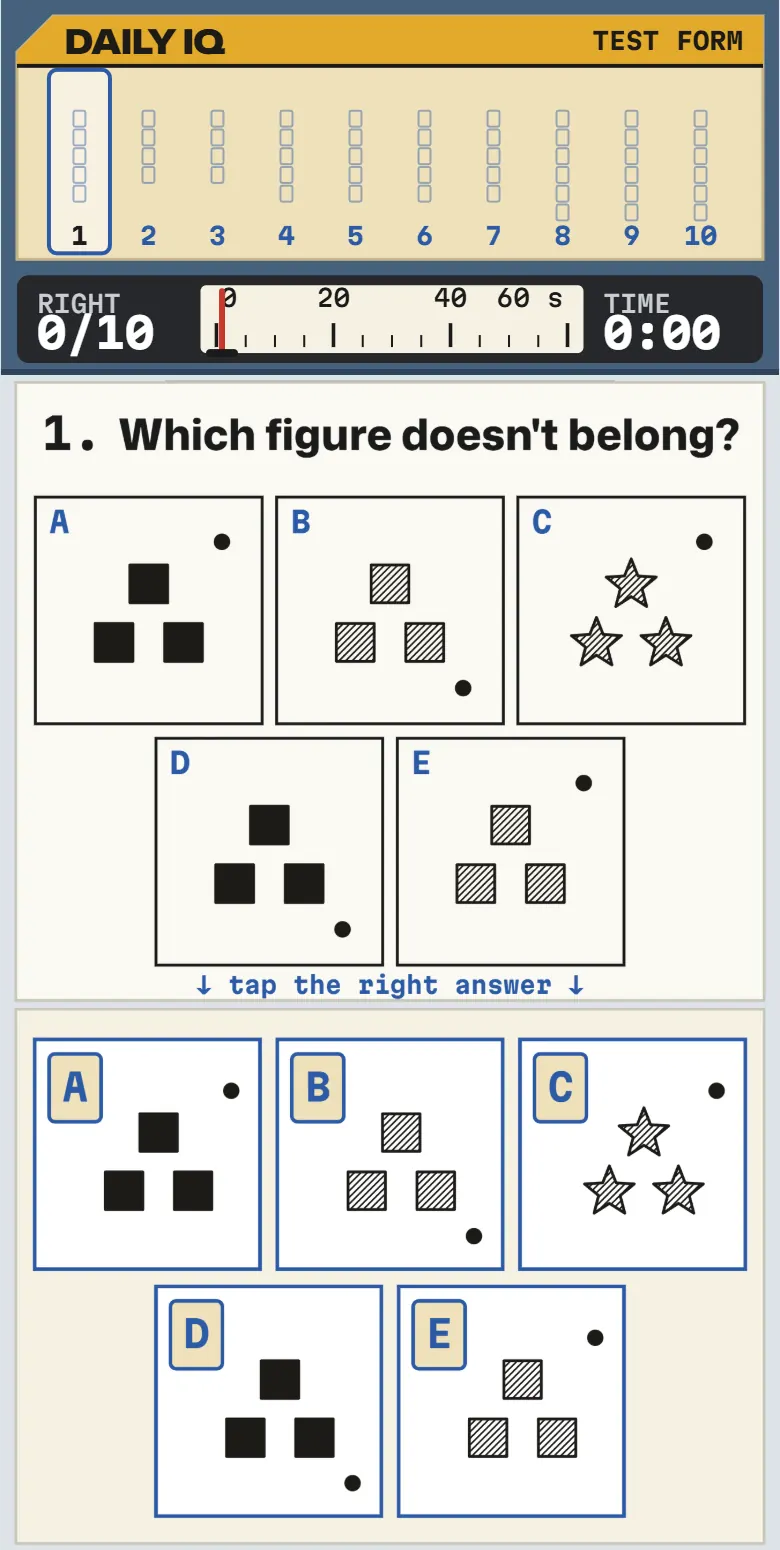
Games that make their puzzles as they go check every one before it can be dealt. Every box in Pack It has been packed clean by a search that plays the game's own physics, Daily IQ keeps a puzzle only when exactly one option is right, and every Purrglar heist is solved by an exact search for the fewest beats the whole haul can take.
How long before something comes back
For games built on questions and answers we keep a written standard for repeats. The target is that a question never comes back within 365 days, and while a game's pool is still being built out the floor is 120 days. Answer games whose days are drawn at random from a big pool, like Uncommet, follow their own rule: a prompt never comes back within 60 days of its last play, and the pool is sized so the average gap is well over 120 days.
GeoDrop's places keep the same 60-day gap, and a day never repeats a country the day before dealt. How Many goes further: no subject comes back within 60 days and no single picture within 365.
The rules are fixed for the day
We change games often. A day's leaderboard would be unfair if half its players had one set of rules and half another, so the first run of a game on a given day pins the version it was played at, and every later run that day loads that same version. A release that changes the rules reaches the game the next day. A change that only touches the drawing, with the same rules underneath, can go out at once.
What happens at midnight
A day's run has to start before midnight New York time. From midnight on, the server will not start one, and the page offers the new day's puzzle instead.
A run that is already under way at midnight still counts, within limits. Its result has to arrive within the longest that game's run can last, plus one minute, and never later than a few minutes into the new day: 00:05 for a two-minute game, 00:07 for GeoDrop and 00:10 for Uncommet. After that the day is closed.
We keep every past day, but nobody can play or open an old day right now. Every way into one is refused, whether it is a link, the page's own address or a request straight to our servers.
A number for every day
Each daily game numbers its days, and a shared result carries the same number the game shows. Most count from 14 October 2026 and Quizette from 15 October; games without a number of their own count from the site's first edition, 13 October 2026.
The Daily plays its own content
The Daily is our one ranked set of three games a day. It never reuses a game's own day. A daily game dealt into The Daily plays content of its own there, from a seed only our server knows until the game starts, so playing a game's own page tells you nothing about its round in The Daily, and the other way round.
- One clock: every day runs midnight to midnight New York time.
- One seed: the game and the date make the seed, and the seed makes the round.
- Planned content: many games deal from tables built years ahead; generated puzzles are checked before they are dealt.
- Fixed rules: a day's first run pins the version everyone plays that day.
- A firm close: runs start before midnight, and old days stay locked.
If something on a day looks wrong to you, a question, a place or a box that will not pack, tell us through the feedback form. How we make games covers where our questions and facts come from.