Pitch Perfect
LeaderboardThe daily pitch memory game: hear a note once, then tune the dial back to it.
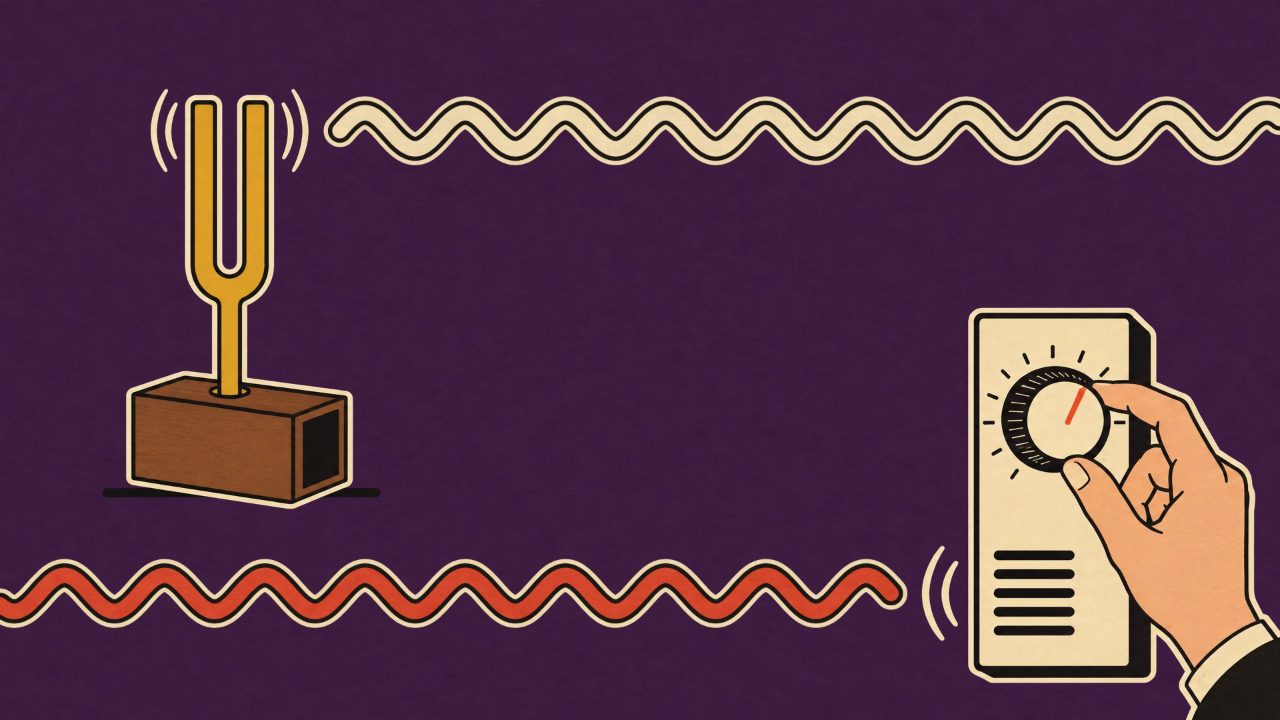

Pitch Perfect controls: Sound on · hear the note · drag the dial to match · lock it in. Press Play, then the game takes the keyboard. Press Tab to leave it.
Pitch Perfect
Hear a note, tune it back.
Pitch Perfect #32 · Fri 13 Nov
Pitch Perfect #32 · Fri 13 Nov
Sound on · hear the note · drag the dial to match · lock it in
How to play Pitch Perfect
Make sure your sound is on, then press CONTINUE.
Listen. Each note plays once: hold it in your head until the dial opens.
Drag the dial: right or up for higher, left or down for lower. Once you touch it, it plays its note over and over in the same instrument: stop where it matches the note you remember.
Drag slowly, or tap the − and + keys, one cent a tap, for the last little bit.
Press LOCK IT IN before the 20 seconds run out, then hear your note, the real note and both together.
Press NEXT NOTE when you are ready. Six notes, then your score out of 6,000.
Controls
| Input | Action |
|---|---|
| Touch: drag the dial right or up, left or down | Move the dial higher or lower, smoothly; a quick drag travels far, a slow one is fine |
| Touch: drag anywhere on the dial's desk | The same: the whole area between the card and the keys moves the dial |
| Touch: tap the dial | Hear the note the dial is on; from then on it repeats |
| Touch: the − and + keys | Go 1 cent flat or sharp; hold to keep going |
| Touch: LOCK IT INNEXT NOTE | Lock your note in; start the next note |
| Mouse: click and drag | The same as touch: the dial, the fine keys and the big key |
| Keyboard: ← → (or A D) | Move the dial 10 cents; hold Shift for 1 cent |
| Keyboard: ↑ ↓ (or W S) | Jump one semitone up or down |
| Keyboard: Enter or Space | Continue, lock your note in, next note |
| Keyboard: R | Hear the note the dial is on |
Tips
Hum the note the moment you hear it, and keep humming quietly until the dial opens. A note you are making yourself is much harder to lose than one you are only remembering.
Travel fast, then slow right down. A quick drag gets you near; a slow one moves the dial a cent or two at a time.
Go a little past on purpose, then come back. It is easier to hear that a note is too high than to judge one you are creeping up on.
Listen to the dial repeat before you lock. Stop dragging, replay the note in your head and compare: if the two agree, lock it.
About Pitch Perfect
An instrument plays a note, once. It stops. Then a dial opens somewhere else on the scale. The dial plays the same instrument, and you drag it until it plays the same note back, from memory. Pitch Perfect is a free daily pitch test, an informal tone deaf test and a pitch memory game: six notes a day, the same six for everyone, one try. When you lock a note in, you hear your note, then the real one, then the two together, while a ruler in cents shows exactly how far apart they are. Land within five cents and the note rings out for a PERFECT.
Your miss is measured in cents, the unit musicians and piano tuners use: 100 cents is a semitone, the step from one piano key to the next. Each note is worth up to 1,000 points. Within 3 cents scores the full 1,000; 20 cents off, a gap many untrained ears can't hear, still scores 850; half a semitone scores 600; a semitone and a half scores 250, and six semitones or more scores nothing. The six notes add up to a score out of 6,000, and on a tie the player who spent less time tuning ranks higher.
The day starts easy and gets harder gently. The first note rings for two and a half seconds, sits exactly on one of the dial's semitone marks, and the dial starts only two to four semitones away, so almost everyone gets close. After that the notes get shorter, down to six tenths of a second, the wait before the dial opens gets longer, up to three and a half seconds, the dial covers more notes, and the note sits between the marks. The instruments are warm ones: a felt piano, a marimba, a harp string, a singing glass, a flute and a hand bell, one for each note of the day.
People look for a tone deaf test or a perfect pitch test to find out how good their ear is. Pitch Perfect answers a slightly different question, and a more useful one: how well can you hold a pitch in your head and find it again? That is pitch memory, the skill singers and string players train every day, and you do not need to read music or know a single note name to play. If you can hum a tune back, you can play this, and the game tells you, in cents, how true you were. It sits with our other memory games, next to Dejahue, which asks the same of a color, and Rhythm Rhyme, which asks it of a rhythm.
The dial is a ribbed drum that plays the instrument you just heard. Drag it with a finger or the mouse, anywhere on the desk around it: to the right or up for higher, to the left or down for lower. It moves smoothly, a cent at a time, and the heavy ribs are semitones, there to steer by rather than to stop on. Drag quickly to travel and slowly to be exact, like a mouse pointer. Once you have touched it, the note it is on keeps playing softly on repeat, so you can hold it against the one in your head. The two fine keys, minus and plus, move it a single cent. Every sound in the game is synthesized in your browser, so there are no sound files to load and the pitch you hear is exact; what is scored is the dial's own number, never your speakers, so a score means the same on a phone, a laptop or a good pair of headphones.
Pitch Perfect is one of our daily games: six new notes at midnight New York time, one try a day, and a share line that shows how close each note was without giving the notes away. It needs sound, so it opens by asking you to make sure your sound is on, and nothing plays until you continue. It plays the same on phones and computers, free, with nothing to install.
Details
- Category
- Skill Games
- Tags
- Genre
- Casual
- Orientation
- Portrait (9:16)
- Works on
- Mobile & desktopPhones, tablets and computers
- Controls
- Keyboard, mouse or touch
- Length
- About 2 min per run
- Plays
- 120
- Released
- Updated
- Credits
- Design and development: Gamefinity
- Age rating
- 4+
Pitch Perfect FAQ
Is Pitch Perfect a tone deaf test?
It works as an informal one. True tone deafness (congenital amusia) is rare: studies put it at about 1.5 to 4 people in a hundred, and many people who call themselves tone deaf hear pitch well and have simply never trained their ear. The game's bands show where you stand on each note: within 20 cents is IN TUNE, within 50 is CLOSE, and more than 150 is WAY OFF. It is a game, not a medical test.
Do I need perfect pitch to play?
No. Perfect pitch is naming a note with nothing to compare it to. Pitch Perfect plays you the note first and asks you to remember it for a few seconds and find it again, which is pitch memory. Anyone who can hum a tune back can play.
What is a cent?
A hundredth of a semitone. The step between two neighboring piano keys is 100 cents. In listening tests, trained musicians can hear a difference of a few cents; many untrained listeners need 10 to 25 cents or more.
Is the dial the same sound as the note?
Yes. The dial plays the same instrument as the note you heard, at the dial's own pitch, so you are matching like with like. It moves smoothly, a cent at a time: the heavy ribs are semitones, and the − and + keys move it a single cent.
How is the score calculated?
Each of the six notes scores up to 1,000 by how many cents your dial is from the real note: 1,000 within 3 cents, 850 at 20, 600 at 50, 250 at 150 and nothing from 600. The six add up to a score out of 6,000. On a tie, less time spent tuning ranks higher.
How long does a game last?
About two minutes. Each note gives you up to 20 seconds on the dial, and the game waits for you before every new note.
Can I play it on my phone, and does it work on silent?
Yes. It plays on phones and computers. It needs sound, so it starts by asking you to make sure your sound is on. On most iPhones it plays even with the ring switch on silent; just turn the volume up. Headphones help.
When do the notes change?
Every day at midnight New York time. Everyone gets the same six notes, and you get one try a day.
Is Pitch Perfect like the sound game in Dialed?
It is a cousin. Dialed, at dialed.gg, has a sound game where you tune back to a tone. Pitch Perfect plays each note once in an instrument's voice, from a felt piano to a hand bell, synthesized in your browser. There are six notes a day, the same for everyone, and each one is scored in cents against the note you heard. It is our own daily game, and Gamefinity is not affiliated with Dialed.
Next up
More games like Pitch Perfect.


