Be Random
Can you be random? Humans can’t. Flip 32 coins and let the machine judge.
- Round
- 2 minutes
- Works on
- Mobile & desktop
- Category
- Casual

Be Random controls: Tap HEADS or TAILS · keys H and T (or ← →). Press Play, then the game takes the keyboard. Press Tab to leave it.
Free play · 2 minutes · no sign-in
Tap HEADS or TAILS · keys H and T (or ← →)
How to play Be Random
Tap HEADS or TAILS (or press H and T) 32 times, trying to make your flips look like a real coin's.
Read the machine's report: your randomness score, your streaks, switches, balance and patterns against a real coin, and the one thing that gave you away.
Tap to start round two. Before each flip the machine seals a guess about what you will pick.
Flip 32 more times and try to fool it. Watch the needle: it shows how often the machine has called you.
See how often it guessed you and everyone else today, then share your printed report.
Controls
| Input | Action |
|---|---|
| Touch: tap HEADS or TAILS | Flip heads or tails |
| Touch: tap anywhere on a report | Go on to the next round or your final report |
| Mouse: click HEADS or TAILS | Flip heads or tails |
| Keyboard: H or ←, T or → | Flip heads, flip tails |
| Keyboard: Space or Enter | Go on from a report |
Tips
Let streaks happen. In 32 real flips a run of four or more of the same side turns up 92% of the time, so a tape with nothing longer than three looks made up.
Do not switch on purpose. A real coin switches sides about half the time; most people switch about 60% of the time, which is the easiest tell of all.
Do not chase balance. Exactly 16 heads happens only 14% of the time; 13 to 19 heads all look natural.
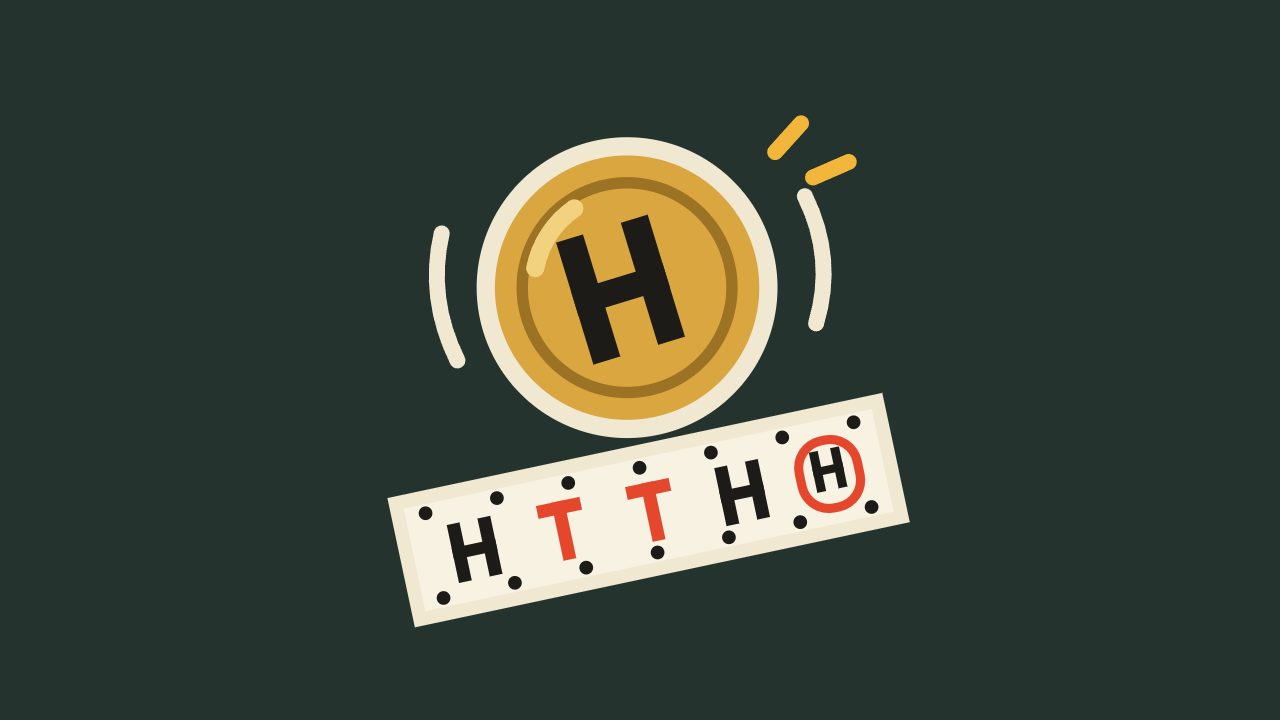
Watch out for rhythms. The machine counts what you did after every pattern of up to four flips, so a favourite little sequence like H T T H gets read quickly.
To fool the machine you have to stop being predictable about how you are unpredictable. If you notice yourself following a rule, any rule, it has probably noticed too.
About Be Random
Be Random is a free online randomness test that asks a simple question: can you be random? You choose 32 coin flips, heads or tails, one at a time, and try to make them look exactly like a real coin did it. It sounds easy. It is not: people are famously bad at it. We avoid long streaks, we switch sides too often and we keep heads and tails too even, and a 1950s-style outguessing machine is waiting to show you exactly where your flips gave you away. A game takes about a minute, runs in your browser with no download, and sits happily among our quick games and brain games.
In round one the machine reads your tape and prints a report with real, exact statistics. Your longest streak is set against what 32 real coin flips give (a real coin runs to 5 or more in a row in 65% of runs, and to 4 or more in 92%), your switches against the coin's 50%, your heads and tails balance, and the pattern you repeated most. Each one is marked typical, plausible, unusual or rare for a real coin, the four add up to a randomness score out of 100, and the machine names the single biggest tell, like "You never let a streak go past 3. A real coin does in 92% of 32-flip runs." Every probability it prints is computed exactly over all 4,294,967,296 possible sequences of 32 flips, not estimated.
Round two is beat the predictor. The machine has read your first 32 flips, and before each of your next 32 it seals a guess. After you flip, the guess is revealed: CALLED IT or FOOLED IT, and its hit-rate needle moves. Against a real coin it could only ever be right half the time, but against people it is usually right about 60% of the time, because it keeps eight simple theories about how people flip (you switch, you repeat, you break streaks, you replay patterns) and trusts whichever has been right about you lately. At the end it tells you which theory worked best on you. Each day the machine runs a different program, its opening hunch about you, like the Gambler, who bets your streaks will break.
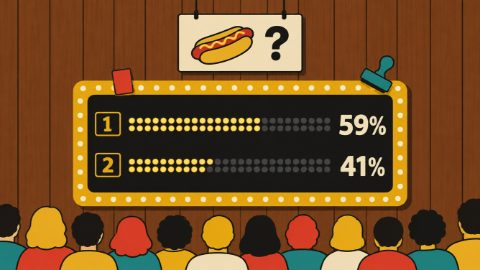
The best part is seeing everyone else. Played for fun, Be Random shows today's crowd: a chart of everyone's longest streaks beside a real coin's (people pile up at 3 and 4 in a row, the coin spreads out to 6, 7 and beyond), everyone's switching rate, how often the machine guessed people today and "more random than 72% of the people who took it today". Then the machine prints your report, a torn-off receipt with both tapes, both scores and the tell, made for a screenshot or the share button.
Your score is your randomness out of 100 plus the share of round two's flips that fooled the machine, so a perfect coin-like tape and a machine you fooled every time would make 200. Ranked runs are replayed and checked on our servers, so the leaderboard is fair; the crowd comparison is just for fun and never changes a score. Play it on a phone by tapping the big HEADS and TAILS buttons, or on a computer with the mouse or the H and T keys (the arrow keys work too). It is one of our casual games, plays on mobile and PC, and there is no way to lose: every run ends with a score and something you did not know about chance.
Details
- Category
- Casual Games
- Tags
- Genre
- Casual
- Orientation
- Portrait (9:16)
- Works on
- Mobile & desktopPhones, tablets and computers
- Controls
- Keyboard, mouse or touch
- Released
- Updated
- Credits
- Design and development: Gamefinity
- Age rating
- 4+
Be Random FAQ
How long does a game of Be Random take?
About a minute: 32 flips, the machine's report, 32 more flips against the machine, its report on you, and the final printout.
How is the randomness score calculated?
Four statistics of your 32 flips (the longest streak, how often you switched sides, the heads and tails balance and the most repeated 4-flip pattern) are each compared with the exact distribution for 32 fair coin flips. A value a real coin often lands on gets full marks; a value it almost never reaches gets close to none. Streaks and switching count 35 points each, balance and patterns 15 each. A real coin usually scores between 55 and 100.
How does the machine predict my flips?
It has no tricks and no randomness of its own. It keeps eight simple theories about how people flip, from "you switch sides" to "you replay four-flip patterns", checks each one against everything you have flipped so far, and lets the theories that have been right about you lately vote on your next flip. It seals that guess before you flip, so it can never see your choice.
Can anyone beat the machine?
A real coin would fool it half the time, and so does a person who is truly unpredictable. Most people get called about 60% of the time because we fall into habits without noticing. Fooling it more than half the time takes either luck or reading its habits as well as it reads yours.
Is it the same every day?
The challenge is: 32 flips, then 32 against the machine. Each day the machine runs a different program, its opening hunch about you, and everyone who plays for fun meets the same one, which is what makes today's crowd comparison fair.
Can I play Be Random on my phone?
Yes. It is made for phones held upright, with two big buttons for your thumbs. It works just as well on a computer with the mouse or the H and T keys.
Next up
More games like Be Random.