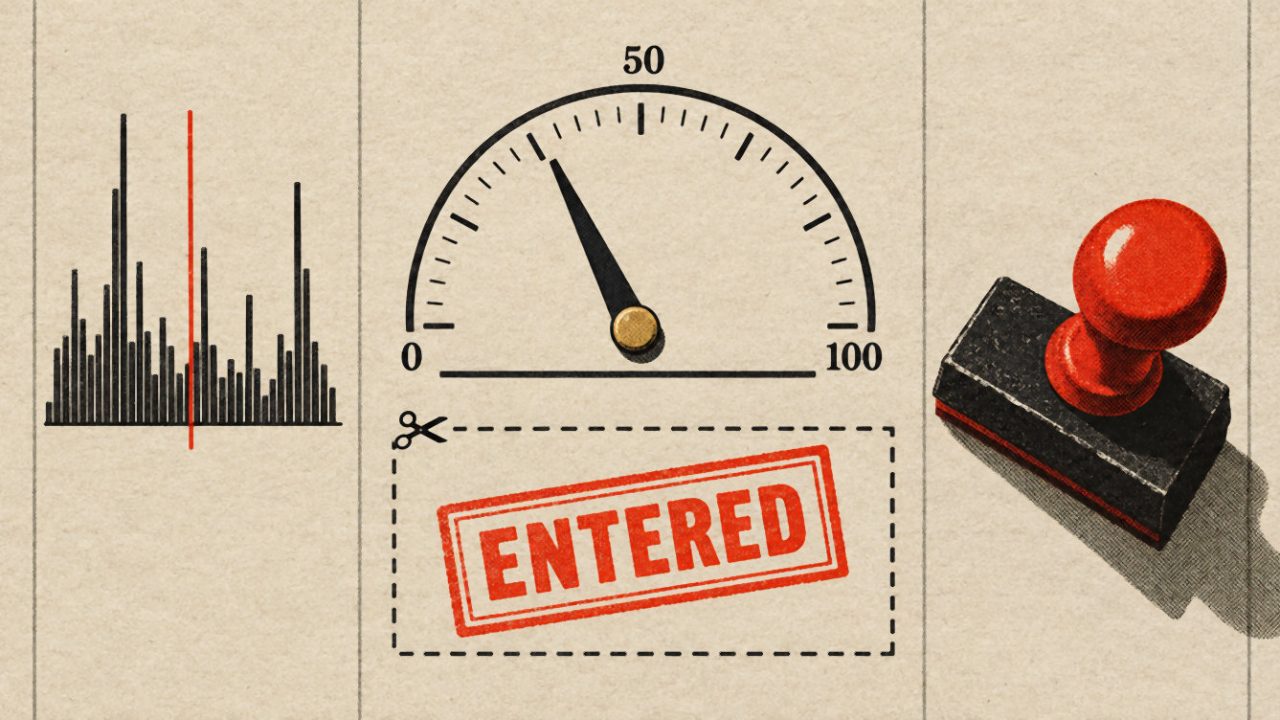
Two-Thirds
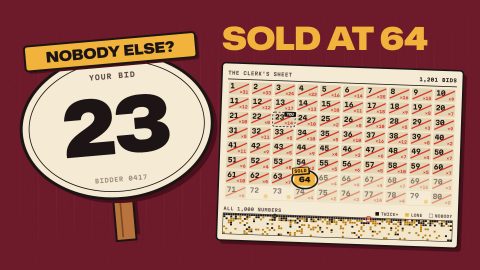
Pick 0 to 100. Closest to two-thirds of everyone's average wins.
- Round
- 2 minutes
- Scoring
- Crowd game
- Works on
- Mobile & desktop
- Category
- Strategy
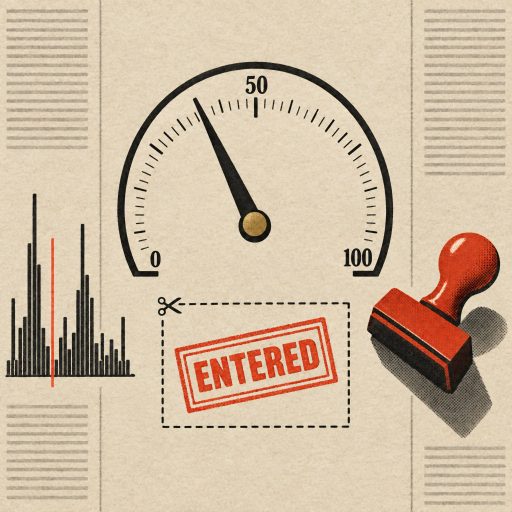
Two-Thirds controls: Drag the dial or tap ± · hold the stamp · keys work too. Press Play, then the game takes the keyboard. Press Tab to leave it.
Free play · 2 minutes · no sign-in
Drag the dial or tap ± · hold the stamp · keys work too
How to play Two-Thirds
Read the front page: yesterday's target, everyone's picks and, if you played, where yours landed.
Tap "Fill in today's entry" (or press Enter) to turn to the entry form.
Drag the needle on the dial to your number from 0 to 100; fine-tune it with − and +, the arrow keys or the digit keys.
Press and hold the red stamp until it lands: your number is entered. Only your first entry of the day counts.
Come back after midnight UTC to see the average, the target (two-thirds of it) and how close you came.
Controls
| Input | Action |
|---|---|
| Touch: drag on the dial | Point the needle at your number |
| Touch: tap − or + | Move the number by one (hold to repeat) |
| Touch: press and hold the red stamp | Stamp your number in (one entry a day counts) |
| Mouse: drag the needle, click − or +, hold the stamp | The same as on a phone |
| ← and →↑ and ↓ | Move the number by one / by ten |
| Digit keys 0–9, Backspace | Type your number, drop a digit |
| Space or Enter | Turn the page; hold to stamp; finish |
Tips
Don't play the theory. Zero is the game-theory answer, but it only wins on a day when almost everyone picks near zero, and that has never been how a crowd plays.
Think in levels and stop one step past the crowd: random pickers average about 50 (target 33), readers who see that pick 33 (target 22), one more step gives 15. Most crowds stop after one or two steps.
Read yesterday's histogram before you pick. It shows how deep this crowd really goes: tall spikes at 33 and 22 with a crop of zeros usually put the target near 20.
Remember the pranksters: the readers who pick 100 or 50 pull the average up, so the target sits a little higher than the pure level-by-level answer.
Use the verdict stamp. "Overthought it" means you went a level too deep; "not deep enough" means the crowd was cleverer than you guessed. Adjust tomorrow.
About Two-Thirds
Two-Thirds is a free daily guess 2/3 of the average game. The rules fit on a ticket: pick a whole number from 0 to 100, and whoever is closest to two-thirds of the average of everyone's picks wins. You get one entry a day, everybody plays the same contest, and the result prints after midnight UTC. The whole game is a small newspaper, The Two-Thirds: yesterday's result is the front page, today's entry form is inside, and you lock your number in with a red rubber stamp. It runs in your browser with no download and an entry takes about half a minute, which makes it one of our calmest quick games.
The idea is older than the internet. In 1936 the economist John Maynard Keynes compared investing to a newspaper contest in which readers had to pick the faces that the other readers would pick, so the winning move was to guess what everyone else would guess. Economists later turned that Keynesian beauty contest into a number game, often called the p-beauty contest: guess two-thirds of the average. Newspapers and magazines have run it with thousands of readers, and the winning number tends to land somewhere in the teens or low twenties, far from where most people expect it.
Why so low? Think it through in levels. If everyone picked at random, the average would be about 50 and the target about 33. But if everyone works that out and picks 33, the target falls to 22. If everyone sees that too, it falls to 15, and so on, step by step, all the way down to 0, which is the answer game theory gives. Real crowds never go all the way. Some readers stop at 33, some at 22, a few pick 0 and a few pick 100 just to drag the average up. So Two-Thirds is not a sum. It is a guess about people: how deep will today's crowd go, and can you go exactly one step further?
While the day is open you only see how many readers have entered, never their picks. After midnight UTC the front page prints the reveal: a histogram of every pick, a dotted line at the average, a red line sliding to two-thirds of it, the band of the closest tenth of the picks, and your own marker with your distance and the share of readers you beat ("the target was 21.4, you picked 22, closer than 96%"). A red stamp gives the verdict: spot on, a hair high, not deep enough, or overthought it. Your first stamped number of the day is the one that counts; playing again is practice. Because your result depends on everyone else's picks, it is a crowd game with no leaderboard, a cousin of our strategy games and casual games for adults.
It plays the same on every screen. On a phone, drag the needle around the meter dial to your number, tap − or + to fine-tune it and hold the red stamp until it lands. On a computer, drag the needle with the mouse or use the keyboard: the arrow keys move one or ten steps, the digit keys type your number directly, and holding Space or Enter stamps it. You will find Two-Thirds among our mobile games and PC games. Come back each day for a new contest and a new front page: the daily number game that is really about everyone else.
Details
- Category
- Strategy Games
- Tags
- Genre
- Strategy
- Orientation
- Portrait (9:16)
- Works on
- Mobile & desktopPhones, tablets and computers
- Controls
- Keyboard, mouse or touch
- Released
- Updated
- Credits
- Design and development: Gamefinity
- Age rating
- 4+
Two-Thirds FAQ
How long does a game of Two-Thirds take?
About half a minute: read yesterday's result, set your number on the dial and hold the stamp. You enter once a day, and the result prints after midnight UTC.
How is the winner decided?
All of the day's picks are averaged, and the target is two-thirds of that average. The picks closest to the target win. Your result shows the target, your distance from it and the share of other readers you were closer than.
What is the Keynesian beauty contest?
John Maynard Keynes compared the stock market to a newspaper contest where readers win by picking the faces other readers will pick. Guessing two-thirds of the average is the classic number version of that idea, used by economists to see how many steps ahead people think.
Why not just pick 0?
Zero is where perfect reasoning ends up if everyone reasons perfectly. Real crowds stop after a step or two, and some readers pick high numbers on purpose, so the target lands well above zero and a zero is usually far from it.
Can I change my number?
No. Your first stamped number of the day is your entry. You can play again the same day, but those rounds are practice and the stamp says so.
Is there a leaderboard?
No. Two-Thirds is a crowd game: your result depends on everyone else's picks, so it has no ranked play or leaderboard. The daily reveal shows how you did against everyone who played.
When does a new day start?
At midnight UTC. That is when the day's entries close, the reveal prints and a new contest opens. Your local time for it depends on your time zone.
Can I play Two-Thirds on my phone?
Yes. It is made for a phone held upright: drag the dial, tap − and +, and hold the stamp. On a computer you can use the mouse or the keyboard.
Next up
More games like Two-Thirds.